

Cinnamon Essential Oil Cheat Sheet | Benefits, Uses & Safety

Cinnamon essential oil is a warm, spicy, sweet-smelling oil that instantly evokes memories of freshly baked treats, cozy mornings, and the holiday season. But there’s much more to this aromatic spice than its familiar aroma.
Cinnamon essential oil benefits and uses range from creating an uplifting atmosphere and promoting focus to soothing sore muscles, freshening your home, and helping repel unwanted insects.[1]
There are two main types of Cinnamon essential oil: Cinnamon Bark essential oil and Cinnamon Leaf essential oil. Both come from Cinnamomum zeylanicum and are steam distilled, but their chemical compositions, and therefore their aromas and ideal uses, differ. Cinnamon Bark is particularly rich in cinnamaldehyde, while Cinnamon Leaf contains significantly more eugenol.
So, which Cinnamon oil should you use? Keep this cheat sheet handy.
Cinnamon Essential Oil Cheat Sheet
|
Cinnamon Leaf |
Cinnamon Bark |
|
Boost your mood |
Boost focus |
|
Soothe sore muscles |
Support healthy immune function |
|
Repel insects |
Use in natural cleaning products |
|
Sweet, spicy & woody aroma |
Intense, warm & spicy aroma |
|
Better suited for carefully diluted |
Best reserved primarily for aromatic and household uses |
Cinnamon Leaf Essential Oil: 3 Best Uses
#1 Boost Your Mood
One of the most popular Cinnamon essential oil uses is aromatherapy. Its warm, spicy aroma can create an inviting, cheerful atmosphere and help you feel energized.
If you’re feeling sluggish or need a little aromatic pick-me-up, add Cinnamon Leaf to your diffuser or Essential Oil Inhaler. It also blends beautifully with citrus and spice oils such as Orange, Tangerine, Clove and Ginger.
Try it: Diffuse Cinnamon Leaf with Orange for a bright, spicy aroma that makes your space feel instantly cozier.
#2 Soothe Sore Muscles
Cinnamon Leaf essential oil can also be a warming addition to a massage blend for tired or sore muscles.[2] When properly diluted in a carrier oil, its naturally spicy aroma pairs especially well with oils traditionally used in massage, such as Peppermint, Copaiba, Frankincense, and Basil.
For topical use, always dilute Cinnamon Leaf essential oil and perform a patch test before widespread application. Cinnamon oils can cause skin irritation or sensitization when used incorrectly. Industry safety guidance places the maximum dermal concentration for Cinnamon Leaf at approximately 0.6%, or 3 drops per every 1 oz of carrier oil.
Try it: Add a very small amount of Cinnamon Leaf to a carrier oil for a warming post-workout massage.
#3 Repel Insects
Looking for a naturally aromatic way to help keep insects at bay? Cinnamon essential oil has demonstrated insect-repelling potential, making it a useful ingredient to explore in DIY insect-repellent blends. Cinnamon's aromatic compounds, including cinnamaldehyde and eugenol, contribute to its characteristic spicy scent and have been studied for pest-control applications.
Cinnamon Leaf can be incorporated into a properly formulated room or outdoor spray designed to help deter insects such as mosquitoes, ants and flies.
Important: Always follow appropriate dilution guidelines, avoid applying concentrated Essential Oils directly to skin, and keep DIY insect-repellent preparations away from children and pets.
Cinnamon Bark Essential Oil: 3 Best Uses
#1 Boost Focus
Need an aromatic boost while working, studying, or tackling a long to-do list? Cinnamon Bark's intense, spicy aroma can help create an invigorating environment.
Its warm scent is especially appealing when you want your workspace to feel energized rather than sleepy. Try diffusing Cinnamon Bark on its own or combine it with stimulating, fresh-smelling oils such as Peppermint or Rosemary.
Try it: Add Cinnamon Bark to your diffuser alongside Rosemary for a warm and herbaceous focus blend.
#2 Support Healthy Immune Function
Cinnamon Bark essential oil is rich in cinnamaldehyde, the constituent largely responsible for its characteristic spicy aroma. Research has investigated cinnamon oil and cinnamaldehyde for antioxidant and antimicrobial activity, including studies involving bacteria and other microorganisms.[3]
For aromatherapy purposes, Cinnamon Bark can be incorporated into seasonal diffuser blends designed to create a fresh, invigorating environment.
Rather than thinking of Cinnamon as a treatment for illness, consider it a complementary aromatherapy ingredient that can support a healthy wellness routine.
Try it: Diffuse Cinnamon Bark with Eucalyptus, Lemon and Rosemary for a crisp, spicy seasonal aroma.
#3 Add It to Natural Cleaning Products
Cinnamon Bark's naturally powerful aroma makes it a popular ingredient for natural cleaning products and DIY household cleaners. Its constituents have demonstrated antimicrobial activity in laboratory research, making cinnamon oil an interesting botanical ingredient for household formulations.
Add Cinnamon Bark to a properly formulated DIY surface-cleaning recipe to give your home a warm, spicy scent while incorporating the properties of this concentrated botanical oil.
Try it: Combine Cinnamon Bark with Lemon and other fresh essential oils in a properly formulated household cleaning spray.
Cinnamon Bark vs. Cinnamon Leaf: What's the Difference?
Although they come from the same cinnamon tree, Cinnamon Bark and Cinnamon Leaf essential oils aren't always interchangeable.
Cinnamon Bark essential oil has a stronger, hotter, sweeter, and spicier aroma. It contains a high percentage of cinnamaldehyde, which contributes to both its characteristic scent and its higher potential for skin irritation.
Cinnamon Leaf essential oil has a somewhat softer, more herbaceous and woody aroma. It contains much more eugenol than Cinnamon Bark and is generally the more appropriate choice when a properly diluted topical cinnamon oil is desired.
There is also Cassia essential oil, which comes from Cinnamomum cassia and is closely related to true cinnamon. While Cassia, Cinnamon Bark and Cinnamon Leaf share a characteristic spicy aroma, they are distinct essential oils with different chemical profiles.
Cinnamon Essential Oil Safety
Cinnamon essential oil is highly concentrated, so a little goes a long way. Cinnamon Bark in particular should be used with extreme caution on the skin because of its high cinnamaldehyde content and potential for irritation and sensitization.
For topical use:
- Never apply Cinnamon essential oil undiluted.
- Cinnamon Bark has a very low recommended maximum dermal concentration of approximately 0.07%, or 1 drop per 3 oz of carrier oil.
- Cinnamon Leaf has a maximum dermal concentration of approximately 0.6%, or 3 drops per 1 oz of carrier oil.
- Perform a patch test before topical application.
- Avoid contact with the eyes and other sensitive areas.
- Do not ingest Cinnamon essential oil.
- Keep Essential Oils away from children and pets and follow species-specific safety guidance when diffusing around animals.
Because Cinnamon Bark is particularly irritating to the skin, aromatic use is often the simplest way to enjoy its characteristic scent.
Spice Up Your Aromatherapy Routine
So, what is Cinnamon essential oil good for? Quite a lot! Whether you want to create an uplifting atmosphere, support concentration, soothe tired muscles, freshen your home or experiment with natural insect-repelling blends, Cinnamon essential oil offers plenty of versatile uses.
The key is choosing the right type. Reach for Cinnamon Leaf for mood, massage and insect-repelling applications, while Cinnamon Bark is especially suited to focus, seasonal aromatherapy, and natural cleaning products.
When shopping for Cinnamon essential oil, look for a company that prioritizes purity, transparency and quality testing. Edens Garden Cinnamon essential oils offer both Cinnamon Bark and Cinnamon Leaf essential oils, with GC/MS testing used to verify their chemical profiles.
SOURCES:
- Vivea D. Cinnamon’s Spicy History. History.com. Available from: History.com.
- Utchariyakiat I, Surassmo S, Jaturanpinyo M, Khuntayaporn P, Chomnawang MT. Efficacy of cinnamon bark oil and cinnamaldehyde on anti-multidrug resistant Pseudomonas aeruginosa and the synergistic effects in combination with other antimicrobial agents. BMC Complementary and Alternative Medicine. 2016;16(1):158. Available from: PubMed Central (PMC). https://pmc.ncbi.nlm.nih.gov/articles/PMC4888607/
- Gunawardena D, Karunaweera N, Lee S, van Der Kooy F, Harman DG, Raju R, Bennett L, Gyengesi E, Sucher NJ, Münch G. Anti-inflammatory activity of cinnamon (C. zeylanicum and C. cassia) extracts – identification of E-cinnamaldehyde and o-methoxy cinnamaldehyde as the most potent bioactive compounds. Food & Function. 2015;6(3):910–919. Available from: Royal Society of Chemistry. https://pubs.rsc.org/en/content/articlelanding/2015/fo/c4fo00680a
Grab The Essentials Here:
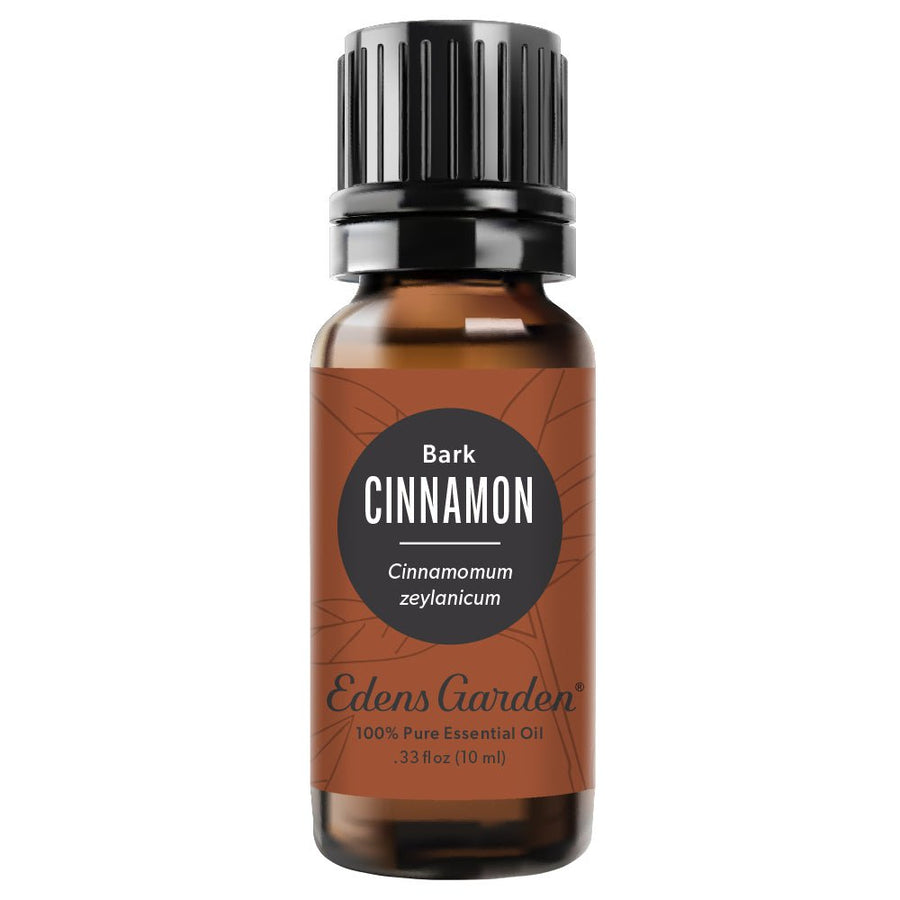
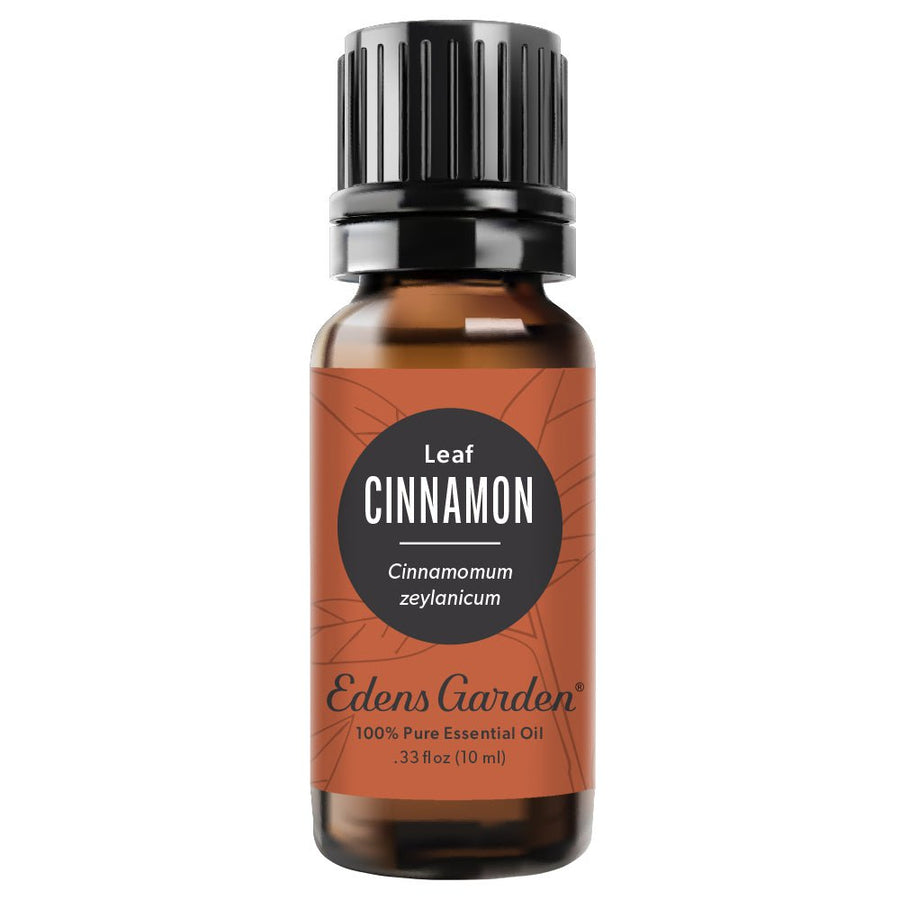
About the Author, Bella Martinez
Bella Martinez is a Certified Aromatherapist, Natural Skincare Formulator and Edens Garden’s lead aromatherapist. An industry expert, Bella has spent years training and learning in the aromatherapy field, which she continues annually. Her passion is taking evidence-based aromatherapy and making it approachable for all.



Leave a comment (Comments will be approved before showing up)